Home / Products / Keychains & Gifts / Custom Enamel Keychain Charm
Custom Enamel Keychain Manufacturer — From 100 Pieces
The merchandise-maker's workhorse: die-struck enamel keychains and pins from your artwork at 100-piece minimums, hard or soft enamel, with mould fees from $25 that amortise into relevance by piece 300.
- 100 pcs per design minimum
- Mould fee $25-60, kept free 3 years
- Hard & soft enamel, epoxy, rubber fills
- Reorder runs ~12 days, same mould
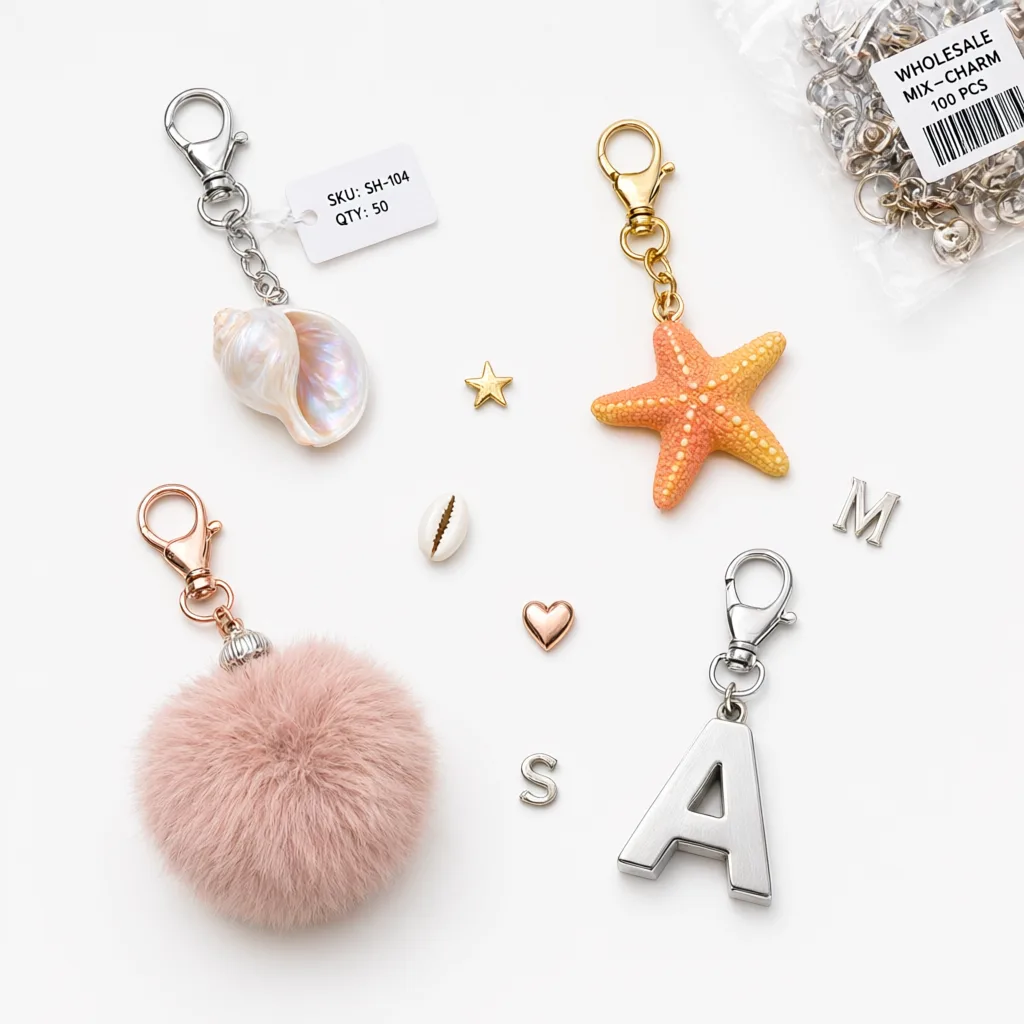
Custom enamel goods occupy the rare position of being both the smallest order we run and one of the most strategically important products a client ever places. The reason is that enamel keychains and pins are how merchandise becomes real for creators, bands, game studios, coffee brands, hotels, conventions and corporate programs — the physical asset that carries a logo with a finish quality that says “this brand is serious” at a $1–$3 unit cost.
The first decision is enamel method. Soft enamel: die-struck recesses filled with epoxy that sits slightly proud of the metal lines — textured to the fingertip, glossy, the most economical path and 80% of the market. Hard enamel: the recesses overfilled and sanded polished flat so the surface is glass-smooth across metal and color — the museum-pin surface, the corporate-gift tier, the one creators point at when they say “make it feel expensive.” Between them live epoxy-printed full color (unlimited artwork detail with no raised lines), anodized imitation, rubberized fills (the soft-touch sports-and-gaming fill), glitter and glow-in-the-dark epoxy.
Artwork is where a 100-piece dream meets physics. Enamel is line art made physical: metal lines separate color fields, so the file needs closed fills, minimum 0.25 mm line weights, no gradients (color steps instead), and sizes designed at 30–50 mm where detail survives plating and sanding. Most client artwork arrives as a full-color logo PNG. Our included step at intake is a free feasibility redraw: we show you exactly what your design becomes at enamel scale before a cent moves. That conversation prevents more failed programs than any inspection we run after production.
Plating runs on iron or zinc die-cast bases (copper base at premium tier for the cleanest line edges) in gold, rose, nickel, black nickel, antique and silver-tone finishes; plating adhesion gets the cross-cut tape test at inspection. Keychain format adds a split ring and link at 25–45 mm, pin format ships with rubber, butterfly or locking clutch — locking clutches are the tier corporate event programs upgrade to because a pin that falls off a lanyard lanyard is a lost brand impression, and event people know it.
The quantity economics deserve one honest paragraph: at 100 pieces, the mould fee ($25–60 one-time) is a large slice of your unit cost; at 300–500 it nearly disappears; the per-piece curve flattens hard past 1,000. Reorders reuse your mould free for three years and run roughly 12 days. Most successful programs start at 100–200 as a store-drop test and reorder at 500–2,000 when the drop sells — the tooling-kept-on-file model exists precisely so the reorder loop stays cheap.
Specifications
| Size | 25-60 mm standard; keychain formats with 25/32 mm split rings |
|---|---|
| Methods | Soft enamel, hard (polished) enamel, printed epoxy, anodized, rubber fill, glitter/glow epoxy |
| Base metal | Iron or zinc die-cast; copper base premium tier for crisp line edges |
| Plating | Gold, rose, nickel, black nickel, antique, silver; matte and gloss; e-coat option |
| Colors | Pantone solid matching on all epoxy tiers; gradient via multi-pour option |
| Backings | Pin: rubber, butterfly, locking clutch / Keychain: nickel- or antique-plated split rings + chain link |
| Add-ons | Numbered editions, glow backs, bottle-opener functional tiers, LED novelty |
| Packaging | Individual backing card (custom printed from 500), OPP poly, bulk dozens |
| Lead time | Proof 3-5 days; production 5-12 days; air rush for event dates quoted honestly |
Hard vs soft, decided by price point and fingertip
If retail is under $8, soft enamel is the honest answer — glossy, legible, cheap, and at small sizes the line detail survives. Above $10, buyers touch the pin and the fingertip knows what it is: hard enamel's flat polished surface is the difference between merchandise and object. We send a plated same-design pair (hard and soft) to your desk on request — ninety cents of samples that settles the entire tier decision for most programs.
Packaging & MOQ
100 pieces per design, both formats, all enamel methods — the real die-struck minimum (mould fees shown as a line item; kept on file free three years). Custom backing cards print from 500. Multi-design programs (12 designs × 200 pcs) run as one order at mixed counts. Corporate gift sets combining pins, keychains and plaques: 500–1,000 per SKU, kitted and boxed.
Event timelines: artwork to proof in 3–5 days, production 5–12; the freight decision (air vs sea) is the only honest variable left at six weeks out. Convention programs should brief us eight weeks before their date — that is when everything is smooth; four weeks is when we quote the air option.
Gallery
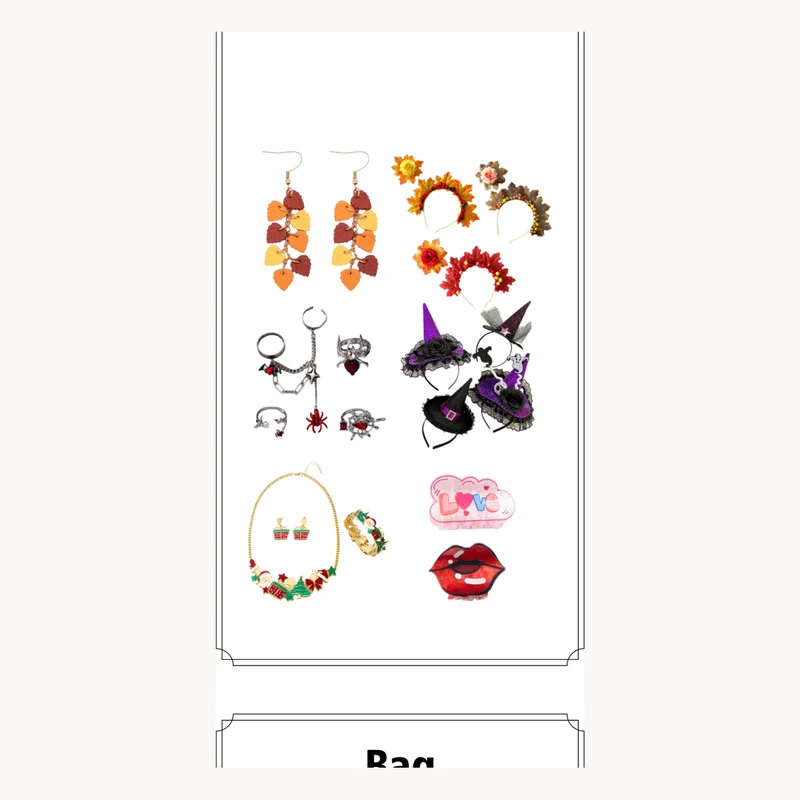
Why every program's first order is often enamel
It is the lowest-risk branded physical product in existence. 100 pieces at low unit cost, nothing to size, nothing to break, an inventory item that does not expire. A creator or brand testing “does our audience buy things” cannot test cheaper or cleaner than a 200-piece enamel drop — which is exactly how most of the durable accounts in this category started.
The reorder loop is the business model. Merch programs that work go annual or go drop-by-drop; either way, reorders on a kept mould run 12 days at improving per-piece cost. A single hit design at 2,000 reorder pieces makes more margin than ten experimental drops, and the mould-free-file system is what keeps that math honest for the client.
Perceived finish outclasses the cost. A hard-enamel pin in antique gold at retail reads like a $15 object while landing under $2. That finish-to-cost gap is the widest in branded merchandise — which is why the enamel pin is the product every serious brand finally commissions once they care about what the merch table says about them.
Event economics convert the walk-up. At a convention, festival or store opening, enamel goods are the highest conversion-rate item on any table: small, priced to impulse, collected rather than shopped. Programs routinely sell through a 500-piece drop across one weekend, with the reorder funding the next tour date.
Corporate gifting buys the premium tier. Recognition awards, onboarding kits and anniversary editions in hard enamel with locking clutches and numbered cards are the corporate order pattern in this category — smaller counts than retail programs, higher unit prices, annual recurrence. One corporate client's yearly edition is worth more than a season of singles.
FAQ
Can you make a pin from my full-color logo?
What is the mould fee and who owns it?
Hard or soft enamel for a $10 retail pin?
Do glow-in-the-dark and glitter fills cost more?
Can I number my edition and card it?
Start your sourcing project
Tell us your target style, budget and quantity. A quote is on your desk within 24 hours.